Your client wants a dedicated workstation for the mission. You don't want another device to manage.
It's a requirement written into more and more client contracts. YS::Desktop
meets it on your existing fleet, without adding a single device.
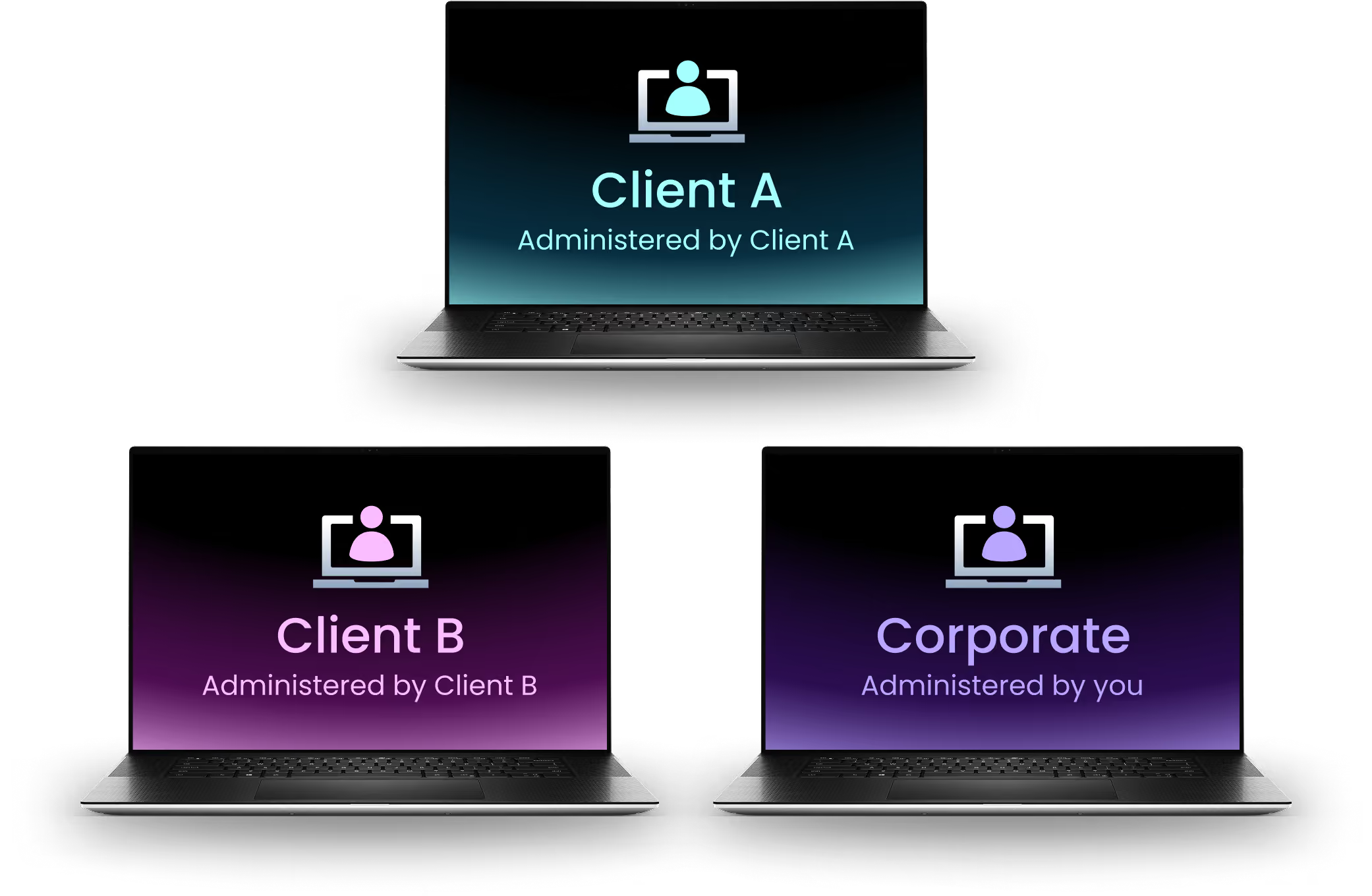
Before

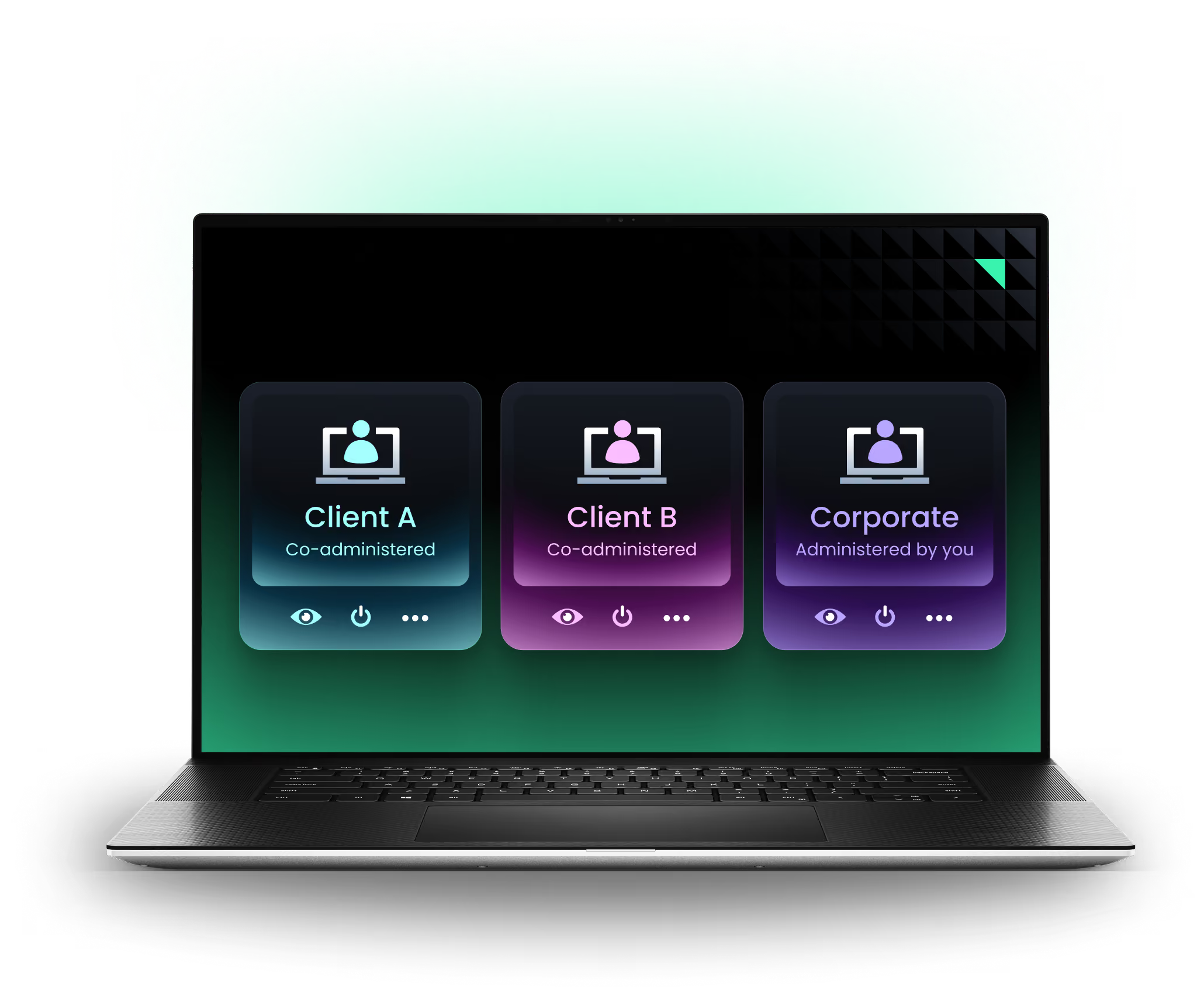
With YS::Desktop


One mandate, one laptop.
That doesn't scale.
Every consultancy running parallel client mandates hits these same four walls.
Every consultancy running parallel client mandates hits these same four walls.
Every new client mandate means procuring, shipping, configuring, and eventually recovering a dedicated machine. More mandates means more cost and more logistics. Not more margin.
Clients increasingly ask for visibility into the master image and the security rules applied to the workstation used on their premises or their systems. On a device you fully own and administer alone, that's a governance conversation you struggle to close.
Under deadline pressure, a consultant reaches for whichever laptop is already on, not the one dedicated to that client. Turning on the right machine and opening the right application takes time they don't have, so the mission's data ends up captured outside the environment meant to contain it.

When a mandate ends, your client wants the guarantee that no data and no access remain on your fleet. Without a clean, verifiable way to reset the environment, that guarantee rests on trust in the consultant, not on technical proof, and the machine often stays half-configured for the next mission anyway.

Total isolation between missions.
No dedicated device required.
YS::Desktop's Type 1 hypervisor lets you run a fully isolated environment for each client mission on your existing fleet, isolated from your own corporate environment and from every other client's environment on the same physical laptop, without dedicating a physical machine to each mandate.


Provision a new isolated environment in minutes when a mandate starts, and reclaim it just as fast when it ends. No laptop to buy, ship, or recover, regardless of how many client missions run in parallel.


Your consultants move between their corporate environment and any client's mission environment with a simple swipe on the touchpad. There's no speed penalty for doing it right anymore
Each mission environment keeps its own activity log, exportable to your client's SOC or yours before the environment is reclaimed. When the mandate ends and the environment is closed, your client gets verifiable proof that none of their data or access remains on your fleet, not just your word for it.
Go further where a client's security policy requires it: give their IT or security team administration rights over that mission's environment, master image, security rules, USB and network policy, without ever exposing your corporate environment or any other client's mission.
What your Operations Director
and IT team get
Meet client requirements for a dedicated, isolated workstation without deviating from your standard fleet policy or buying outside your existing hardware budget.

Stop buying, shipping, and retiring one device per client mandate. Provisioning and reclaiming an environment costs nothing beyond your existing YS::Desktop subscription.

Run several simultaneous, even competing, client missions from a single, fully partitioned laptop, with no cross-domain exposure for IT to monitor or justify.
Spin up a compliant environment before the consultant leaves the bench, and roll it back to a clean state in minutes once the mandate ends. No procurement cycle, no OS reinstall, no ticket queue.

What changes for your
consultants and their clients
Consultants ready on day one
No device request slows down mission kickoff. The environment is provisioned before the bench even knows the mandate started.
Clients get the visibility they require
Without becoming your device manager, and without you becoming theirs. Co-administration stays scoped to their own domain.
No excuse to skip the right domain
Nothing to boot, nothing to forget. The client's environment is just as instantly there as your own desktop.
A clean, provable end to every mission
Your client gets verifiable proof the mission environment, and everything in it, is gone.
Questions Integrators Ask
Before Rolling This Out


Ready to isolate
Without Compromise?
See what it looks like when your consultants arrive on a client mission with a workstation that already meets the client's security requirements. Every time.