.svg)



.svg)


Le coût invisible de l’IA : quand l’exposition des données devient le vrai prix à payer




« L'humanité ne peut rien obtenir sans donner quelque chose en retour.» Telle est la première loi de l’alchimie. Cette observation tirée d’un animé trouve un écho dans l'adoption croissante des agents IA avec interface graphique sur les lieux de travail.
Pour tirer pleinement parti des capacités de Claude Desktop, les organisations le l'intègrent plus que jamais de l’environnement des utilisateurs, en accordant à l’agent IA l’accès à leurs fichiers, leurs outils et leurs sources de données. Mais cette proximité a un coût. Celui-ci ne se mesure pas en frais d’utilisation (en tout cas pas uniquement), mais au niveau d’exposition des actifs les plus précieux d'une organisation : ses données.
Cet article explore à la fois les opportunités et les risques d'une IA profondément intégrée. Nous expliquerons également pourquoi la segmentation est essentielle à une intégration sécurisée des assistants IA.
La Promesse d’un workflow augmenté
Claude Desktop marque un tournant dans la manière dont nous interagissons avec l’IA puisque celle-ci n’est plus confinée à un onglet de navigateur ou à une API. L’agent peut parcourir des répertoires, lire des fichiers et comprendre les structures de projet. En interagissant directement avec le système de fichiers, en exécutant des actions et en les adaptant sans effort, Claude Desktop offre une assistance continue et contextuelle. Cette intégration redéfinit la manière dont le travail est effectué, amplifiant non seulement l’efficacité, mais aussi la cognition elle-même.
Le contexte persistant en tant qu'infrastructure cognitive
L'une des fonctionnalités les plus puissantes de Claude Desktop réside dans sa capacité à fonctionner de manière continue.
Sa fonctionnalité « Persistent Context » permet aux agents alimentés par Claude de mémoriser les contextes d’une session à l’autre, ce qui constitue une étape clé vers le développement d’une IA autonome. Ils sont désormais capables de se souvenir des instructions, des activités récentes et des préférences.
Le contexte persistant est structuré en trois niveaux distincts afin d’assurer un équilibre entre stabilité, adaptabilité et vision à long terme. La couche « Core Identity » intègre les instructions fondamentales qui façonnent le comportement de l'agent, tandis que la couche « Working Memory » (35 Mo) capture les interactions récentes, les projets en cours et les apprentissages actifs. La couche « Long-term Knowledge » stocke les connaissances accumulées, les préférences des utilisateurs et les modèles historiques au fil du temps. Le système orchestre automatiquement les informations stockées dans chaque niveau afin d'optimiser la pertinence et l'efficacité, tout en permettant des modifications manuelles si nécessaire.
Pour un consultant, cela se traduit par la conservation des connaissances sur les clients, les projets et les analyses passées, éliminant ainsi la nécessité de réintroduire le contexte à chaque nouvelle session et permettant au travail de s’accumuler progressivement plutôt que de repartir de zéro. Au fil du temps, l’assistant devient en effet une forme de mémoire de travail externalisée.
Pour les équipes de R&D, les implications sont encore plus importantes. Claude Desktop peut suivre l’évolution des hypothèses, des expériences et des itérations tout en aidant à structurer les progrès de la recherche de manière cohérente. Il devient une archive interactive de décisions, d’idées et de découvertes, accessible à tout moment et capable de soutenir l’exploration continue.
Plutôt que de s’appuyer sur des documents épars et des outils déconnectés, l’IA forme une couche cohésive couvrant l’ensemble du cycle de vie du travail. Plus largement, pour les travailleurs du savoir, Claude Desktop transforme des flux de travail fragmentés en un système cognitif continu. Il ne se contente pas de répondre à des questions. Il mémorise le contexte, relie les idées et prolonge activement la réflexion humaine.
De l'interface à la couche d'exécution
Claude Desktop est une interface simple qui rend exploitable ce qui est complexe. Par exemple, l'Administration nationale de la sécurité nucléaire (NNSA) du Département américain de l'Énergie et Anthropic ont développé conjointement un classificateur alimenté par l'IA, qui identifie les conversations potentiellement dangereuses liées au nucléaire. Lors des phases de test préliminaires, le système a distingué les discussions nucléaires préoccupantes des discussions inoffensives avec une précision de 96 %. Les développeurs d’IA ont désormais accès à un cadre éprouvé pour atténuer les risques nucléaires, ce qui renforce considérablement les capacités de surveillance de la sécurité nationale.
Claude Desktop incarne de puissantes innovations initialement conçues pour soutenir la production, la prise de décision et accélérer les innovations. Telus, l’un des plus grands fournisseurs mondiaux de services de télécommunications et de soins de santé, a intégré Claude au sein de ses équipes de développeurs, d’analystes et de support à l’aide d’un hub unifié. Les développeurs exploitent Claude Code directement dans VS Code et GitHub pour une refactorisation en temps réel. Tandis que le personnel non technique élabore des solutions d’IA sur mesure à l’aide de modèles préconfigurés.
Étonnamment, elle s'apparente beaucoup à l'armure d'Iron Man, car elle augmente considérablement les capacités des utilisateurs. Mais elles partagent également des risques communs. Tony Stark a été conçu pour être un dispositif de maintien en vie. Un dispositif puissant, mais vulnérable. Tout comme Claude.
La suite Iron Man et l’assistant IA d’Anthropic sont tous deux piratables.
C'est pourquoi les systèmes avancés exigent des mesures de sécurité rigoureuses, de crainte que leur promesse d'autonomisation ne se transforme en un danger tant pour les utilisateurs que pour l'organisation dans son ensemble.
Ne vois-tu pas le danger, John, inhérent à ce que tu fais ici ?
« Ils étaient tellement préoccupés par la question de savoir s’ils pouvaient le faire qu’ils n’ont pas pris le temps de se demander s’ils devaient le faire. » L’avertissement du Dr Malcolm dans Jurassic Park illustre un schéma récurrent dans l’adoption des technologies : les technologies efficaces sont adoptées rapidement, avant que leurs conséquences ne soient comprises.
Les assistants IA semblaient inoffensifs. Les utilisateurs les ont adoptés tant dans leur vie privée que professionnelle. Mais en transformant l’IA en un système actif et intégré, Claude risque d’encourager une dépendance accrue et un relâchement de la vigilance.
Il y a un problème lié à cette dépendance que nous avons tendance à oublier : l'IA peut induire en erreur.
De l'hallucination à la corruption silencieuse
L'assistant IA d'Anthropic fonctionne à partir d'informations qui ont une réelle valeur : connaissances internes, données sensibles et contexte définissant le fonctionnement des organisations. Les organisations lui fournissent des informations précieuses, dans l'espoir que les résultats répondent à leurs attentes : documentation cohérente, solutions à des problèmes complexes ou analyses pertinentes.
Cependant, une récente étude de Microsoft révèle que les modèles avancés, y compris Claude 4.6 Opus, peuvent dégrader ou altérer une part significative (environ 25 %) du contenu des documents au cours de workflows itératifs prolongés. En conséquence, les LLM actuels se comportent comme des délégués peu fiables : non pas parce qu’ils échouent souvent, mais parce qu’ils échouent discrètement, au fil du temps et au cours d’interactions prolongées. L’erreur n’est plus un événement ; elle devient un processus intégré à l’utilisation normale.
Cette dynamique est amplifiée par un schéma d'adoption prévisible. Les assistants IA gagnent rapidement la confiance des utilisateurs en apportant un gain de productivité immédiat et en réduisant les frictions dans les workflows. Rapidement, des tâches plus complexes et sensibles sont déléguées, jusqu'à ce que le système devienne une dépendance invisible. À mesure que ces outils s'intègrent plus profondément, la surveillance s'estompe et le contrôle est largement supposé plutôt qu'exercé.
Or, l’IA peut se tromper. Et elle peut corrompre les états financiers, les bases de données et les documents opérationnels, en les réécrivant à la manière d’une mémoire reconstructive humaine.
L'année dernière, un autre rapport de Microsoft indiquait que l'injection de prompts peut transformer un contenu ordinaire en un puissant vecteur d'attaque. Il a révélé que des instructions malveillantes peuvent être intégrées dans les données lues par l'IA, permettant ainsi aux attaquants d'influencer un système qui fonctionne déjà avec un accès approfondi à l’environnement de l’utisateur.
Ces biais suscitent naturellement des inquiétudes quant à l’exposition des données sensibles. Les risques inhérents à l’octroi d’un accès à un environnement à un assistant IA ne sont pas théoriques. Ils sont structurels : plus l’expérience semble fluide, plus elle devient dangereuse.
Le système que l'on cesse de remarquer est celui que l'on cesse de remettre en question.
Le dilemme du RSSI : gardien ou arbitre ?
L'IA ne crée pas de risques foncièrement nouveaux. Des problèmes tels que la divulgation de données sensibles, les failles de sécurité industrielles et l'utilisation non contrôlée des technologies dans l'entreprise existaient déjà. L'IA ne fait que les propager plus rapidement au sein de l'organisation, les transformant ainsi en risques systémiques.
Ce qui change, ce n'est pas la nature de la menace, mais son intensité et sa concentration. À mesure que les assistants IA s'intègrent profondément dans les workflows quotidiens, ils centralisent l'accès aux outils, aux connaissances et aux décisions. Cela crée un nouveau type de vulnérabilité : lorsqu'un problème survient, il n'affecte plus seulement une partie de l'organisation, mais se propage à l'ensemble des équipes, des systèmes et des processus. Le risque n'est plus local ; il devient global et plus difficile à maîtriser.
Dans ce contexte, le rôle du RSSI évolue. Il n'est plus seulement chargé de protéger les systèmes et de faire respecter les règles. Il doit désormais trouver un équilibre entre trois éléments : la productivité, le contrôle et la résilience. Il n'est plus réaliste de vouloir éliminer tous les risques. L'objectif est de déterminer quel niveau de risque est acceptable.
Surtout, la menace la plus immédiate ne provient pas toujours d'attaquants extérieurs. Elle émane souvent de l'intérieur même de l'organisation. Sous la pression, les employés peuvent être amenés à partager des informations sensibles avec des outils d'IA grand public pour gagner du temps. Ce comportement n'est plus rare : il devient monnaie courante. De nombreux responsables de la sécurité considèrent désormais l'utilisation non autorisée de l'IA, souvent appelée « Shadow AI », comme l'un des plus grands risques auxquels ils sont confrontés.
Cette situation met en évidence une limite des méthodes de sécurité traditionnelles. Un contrôle strict ne fonctionne pas à grande échelle. Bloquer des outils ou restreindre l'accès peut s'avérer inefficace. Si les solutions officielles sont trop lentes ou difficiles à utiliser, les utilisateurs trouveront des moyens de les contourner. Et lorsqu'ils y parviennent, les risques deviennent plus difficiles à détecter et à maîtriser.
Le défi ne consiste donc pas à freiner l'adoption de l'IA, mais à l'orienter. Les organisations doivent passer d'une restriction stricte à une mise en œuvre contrôlée. Cela implique de créer des environnements où l'IA peut être utilisée en toute sécurité, avec des règles claires, des cas d'utilisation bien délimités et différents niveaux d'accès en fonction de la sensibilité des données.
En d'autres termes, l'objectif n'est pas d'éliminer toute exposition, mais de l'organiser. Une répartition judicieuse de l'utilisation ne réduit pas la puissance de l'IA, mais la rend plus sûre et plus durable à long terme.
« Ne jamais ranger tout son argent au même endroit »
Si la première question porte sur ce que Claude Desktop rend possible, et la deuxième sur ce qu’il risque, la troisième concerne notre réponse. Puissance et exposition vont désormais de pair, ce qui signifie que la sécurité ne peut plus être une réflexion après coup. Elle doit être intégrée dès le départ. Le défi n’est pas de limiter les capacités de l’IA intégrée, mais de structurer nos environnements de manière à ce que ces capacités restent contrôlées, prévisibles et contenues.
Une leçon simple sur la concentration des informations
Mon père disait souvent de nepas garder tout son argent dans un seul endroit. J’ai ignoré ce conseil une fois et j’ai tout perdu d’un coup : argent liquide, cartes, papiers d’identité, carte d’accès, d'un seul coup. Quand j’ai perdu mon portefeuille, je n’ai pas seulement perdu de l’argent, mais aussi le contrôle sur mon identité. La leçon est simple : quand tout est concentré au même endroit, une seule défaillance peut entraîner une perte totale. Claude Desktop introduit une dynamique similaire sous forme numérique.
C'est précisément cette concentration qui le rend précieux et qui le rend dangereux. Plus le système reçoit de contexte et de capacités, plus il devient utile, mais plus une compromission peut être préjudiciable. En ce sens, le véritable problème n'est pas la capacité de l'IA en soi, mais la proximité incontrôlée. En d'autres termes, le défi n'est pas de savoir s'il faut utiliser l'IA intégrée, mais comment la contenir sans sacrifier son utilité.
Les outils d'IA doivent fonctionner dans des environnements confinés, et non au sein de l'espace de travail principal où se trouvent les données sensibles et les systèmes critiques. La séparation n'est donc pas seulement une option ; elle fait partie intégrante de la solution.
La séparation logique du matériel
Si le risque provient de la concentration, l'atténuation commence par la séparation. Concrètement, cela signifie structurer les environnements de manière à limiter la portée de l'IA.
Une première étape consiste à mettre en place des environnements dédiés à l'interaction avec l'IA. Plutôt que de fonctionner directement au sein d'un espace utilisateur principal, Claude Desktop peut être isolé dans un profil de système d'exploitation distinct. Cela garantit que son accès aux fichiers et aux applications est structurellement limité, plutôt que considéré comme sûr par défaut.
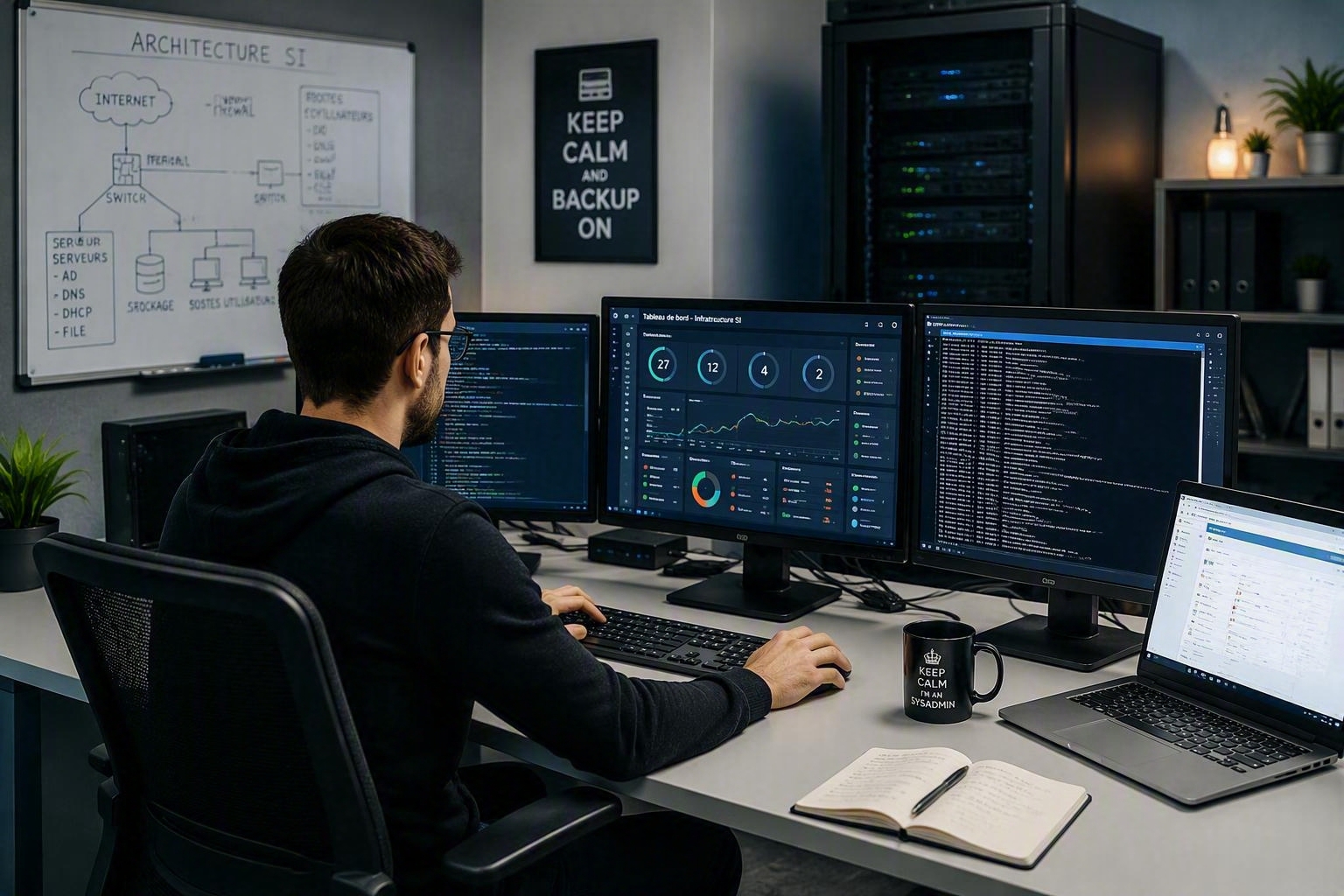
Les nouvelles technologies offrent l'occasion de repenser la conception de l'architecture. Les postes de travail multi-environnements, tels que décrits par les professionnels français de la cybersécurité, constituent un modèle utile pour cette approche. Un environnement peut être utilisé pour le travail général, un autre pour les informations hautement sensibles, et un troisième spécifiquement pour les tâches assistées par l'IA. En structurant les flux de travail au-delà de ces frontières, il devient possible de limiter ce que l'IA peut voir et sur quoi elle peut agir à un moment donné. L'exécution d'outils d'IA au sein d'une machine virtuelle, idéalement soutenue par un hyperviseur de type 1, crée une séparation solide entre le système qui héberge les données sensibles et celui qui interagit avec l'IA. Cela n'éliminera pas le risque, mais transformera l'exposition systémique en une exposition délimitée.
Dans ce modèle, Claude Desktop fonctionne dans un environnement isolé, tandis que les informations critiques restent hors de sa portée directe. Même en cas de défaillance ou de compromission, l'impact est limité à un périmètre contrôlé.
Conclusion : la puissance exige une architecture adaptée
Claude Desktop rapproche l'IA du lieu même où le travail s'effectue, ce qui modifie en profondeur tant les capacités que les risques. Cette proximité, qui permet des flux de travail puissants et continus, concentre également les accès et accroît l'exposition aux risques.
Ce n'est pas une raison pour reculer, mais une raison pour concevoir de manière plus intelligente. À mesure que l'IA s'intègre à notre environnement, les mécanismes de contrôle doivent être intégrés à l'environnement lui-même. Dans ce contexte, la question n'est pas de savoir si ces systèmes sont suffisamment puissants, mais s'ils sont suffisamment encadrés pour inspirer confiance.
La séparation physique n'est pas la seule option pour y parvenir. Le fameux « air gap » est un vestige d'une époque où, dans leur quête d'une sécurité maximale, les départements IT ont parfois négligé l'expérience et des contraintes des utilisateurs finaux. C'est pourquoi nous avons décidé de développer une solution qui concilie une isolation totale sans aucun compromis sur l'expérience utilisateur.
Cela semble trop beau pou être vrai ? Laissez nous vous montrer comment créer un environnement dédié à l'IA ?
Cela pourrait aussi vous intéresser





Prêt à isoler
Sans compromis ?
Démonstration en direct par des spécialistes qui ont résolu ce problème pour des équipes comme la vôtre.
.svg)